

The community magazine for the community
Powered by 
The community magazine for the community
Powered by
© Design Courier. Powered by Medelhan. Developed by Broadweb.80
| CANVAS OF PLANS & DRAWINGS |
INTERIOR & DÉCOR, but with a twist |
| HOTELS & RESTAURANTS, beyond mainstream |
Notes on ART |
| Into big AFFAIRS | INSIDERS |
| GLIMPSES | |
Keywords:
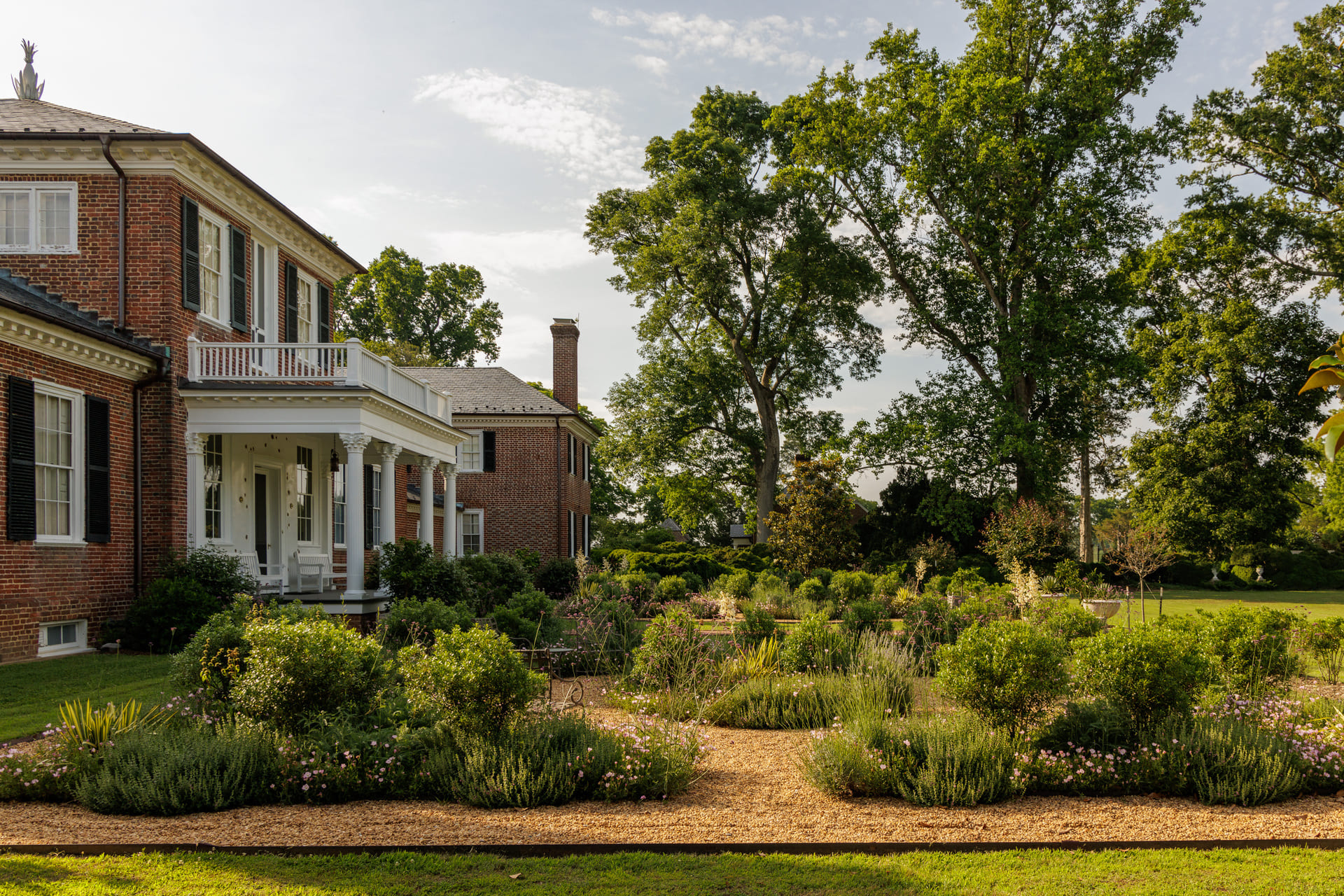
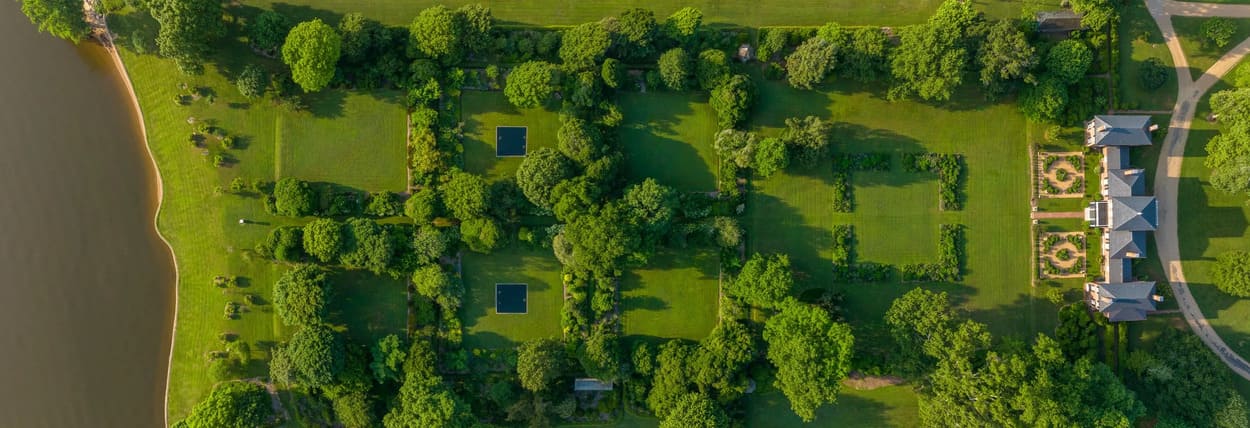
From this careful documentation emerged the guiding framework: geometry. Squares, axes, and framed garden “rooms” became the organizing principle. “At the core of our design was geometry – the underlying language of the formal gardens. We leaned into the square as a recurring motif, introducing symmetrical reflecting pools and defining the great lawn with a large square-framed herbaceous border. Square parterre gardens at the front of the house further clarified spatial order. From this framework, distinct garden ‘rooms’ emerged: contemplative, white-toned spaces around the central pools and more vibrant, river-facing plantings that celebrate seasonal change.” Within this structure, the estate’s vastness resolved into intimacy, each sequence of spaces offering a distinct experience while remaining coherent.
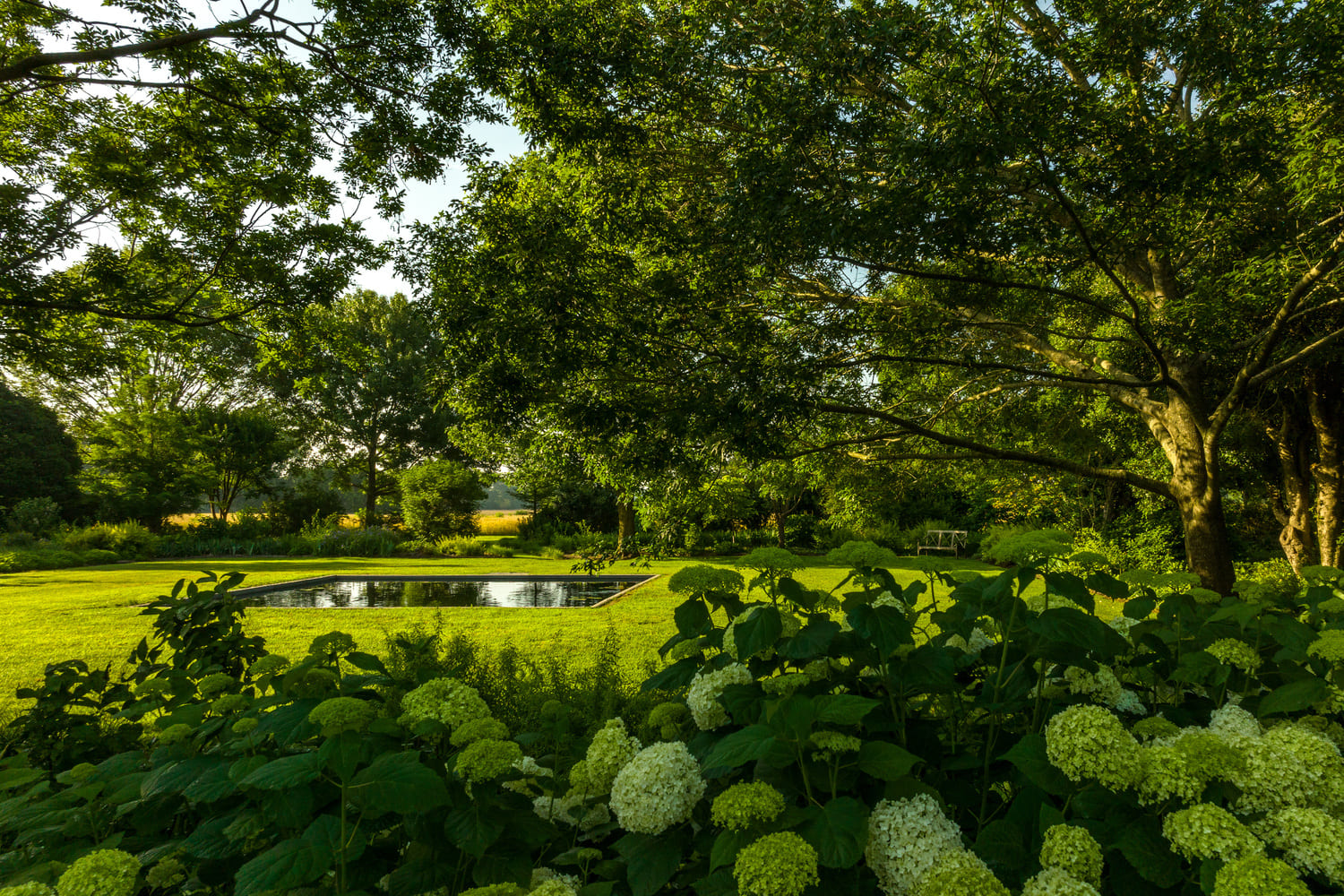
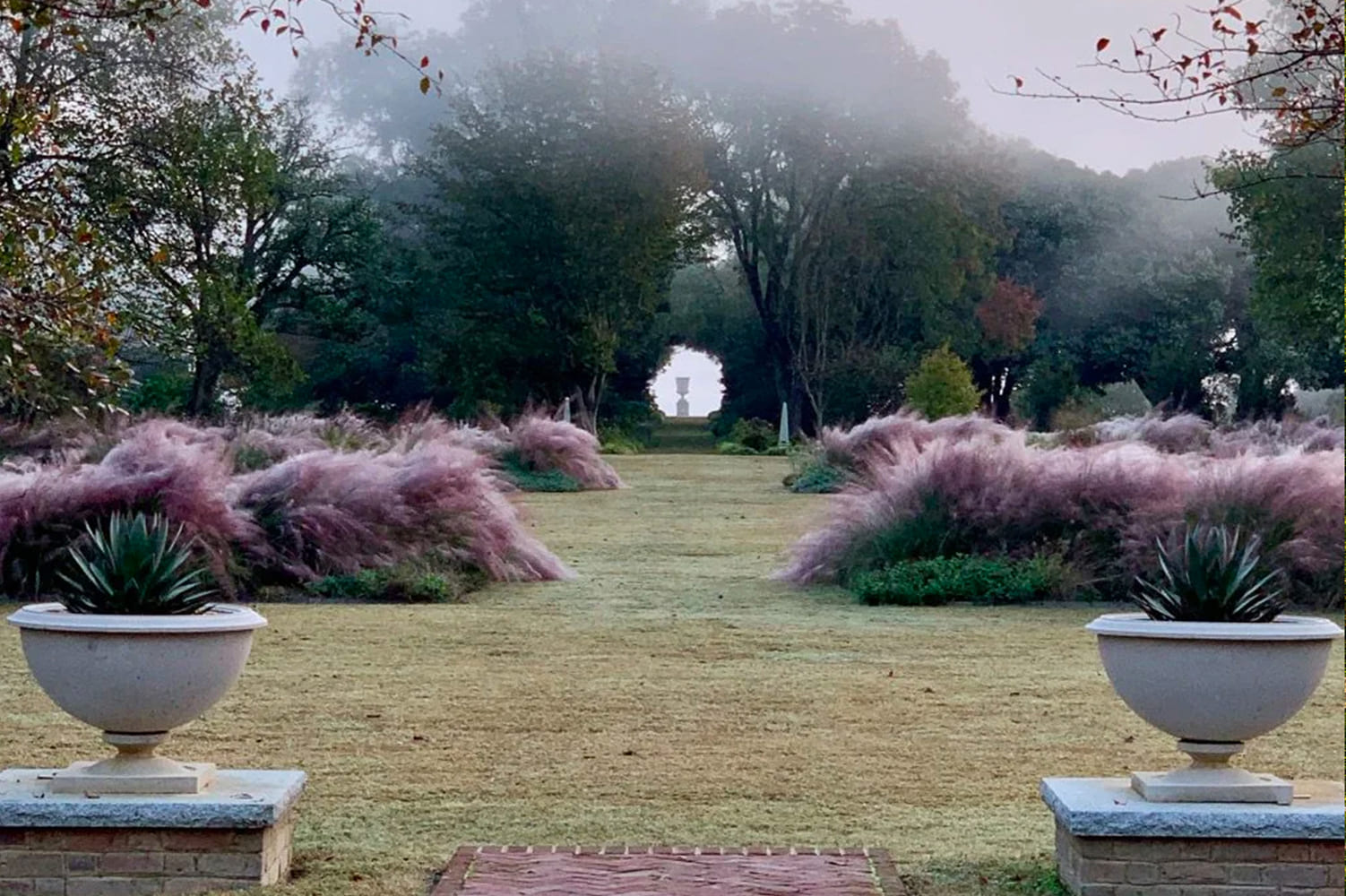
The project carried a dual mission: restoring the historical grandeur while embedding ecological function. “Our design philosophy marries ecological intention with visual clarity – structure and habitat go hand in hand,” Flack says. The formal geometry provided a skeleton for a planting palette rooted in native species that thrive locally and support wildlife. “Rather than tucking ecological planting behind formal bones, we made it visible and integral. Massed native grasses and perennials are organized within the geometric framework so that the rhythm of lush, seasonal growth amplifies the architecture of the gardens.” Structure and ecology reinforce each other, producing rhythm, contrast, and movement without compromising the clarity of the design.
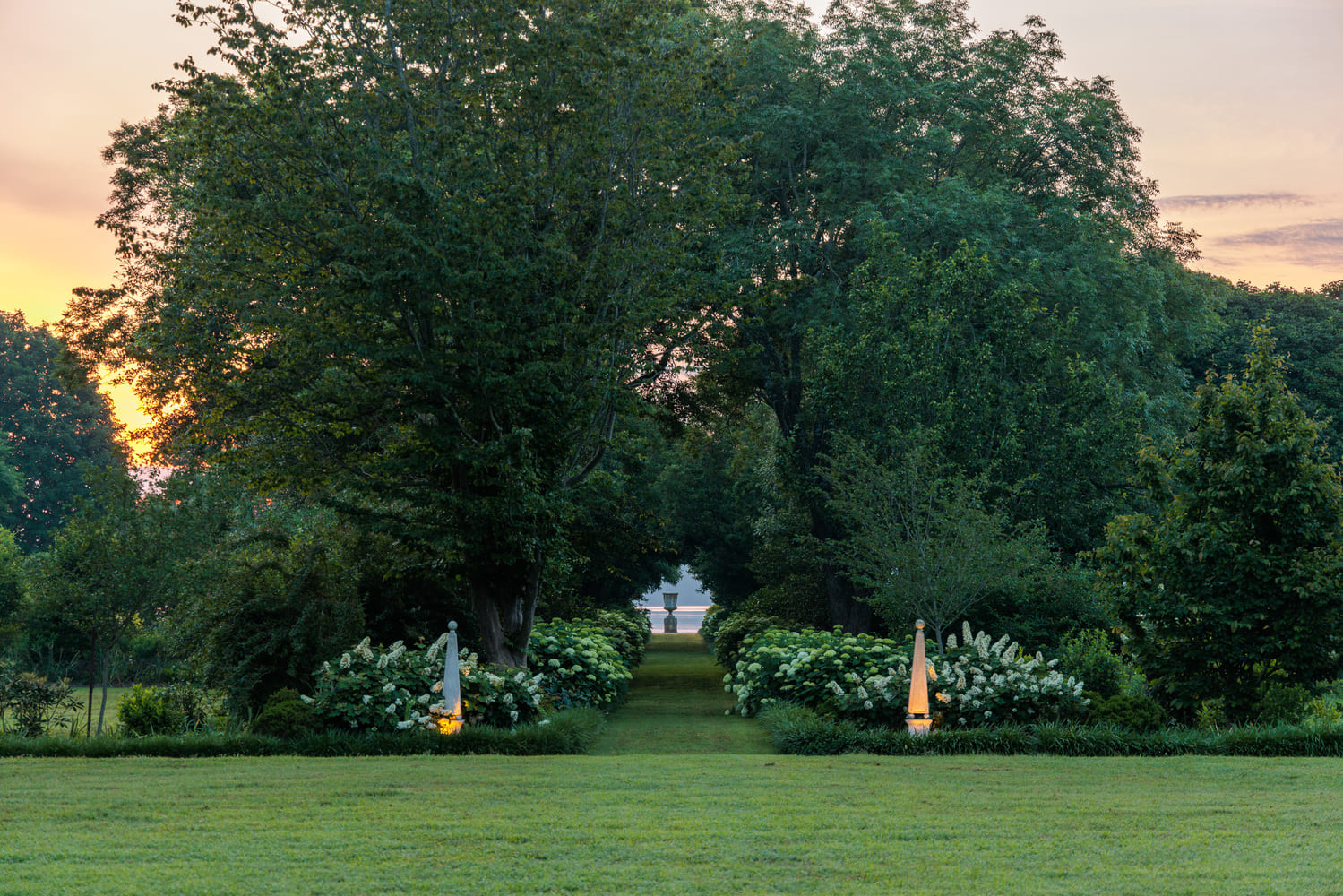
The palimpsest concept shaped not only structure but planting. “The estate’s long history revealed multiple garden iterations, and we treated these as layered traces to be studied, understood, and selectively honored. Working with the idea of an ‘old palimpsest’ allowed us to peel back accumulated additions and focus on what gave the landscape its most compelling identity. We emphasized the central axis, reinforced spatial hierarchy, and clarified the geometry that had been obscured over time. Once the framework was determined, we introduced a contemporary plant language that reads clearly within that framework – a way of anchoring history while letting the planting express ecological richness.”
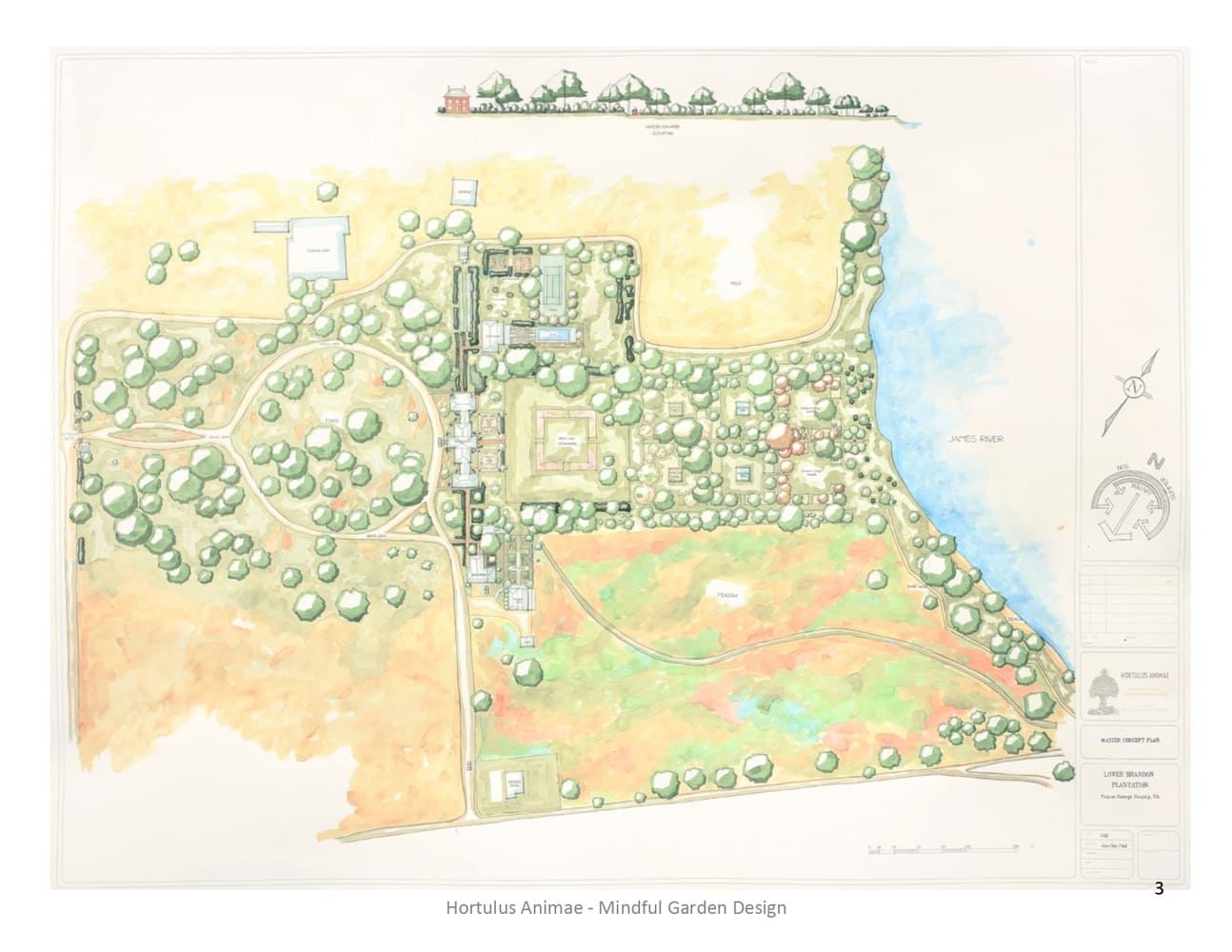
Native species and geometric order were integrated deliberately to produce both drama and vitality. “The formal geometry of the estate – terraces, axes, and framed garden ‘rooms’ – were the design’s organizing principle. Within that structure, we curated a planting palette focused on native species selected for seasonal expression, ecological function, and their ability to create rhythm and contrast within the formal bones of the garden. We integrated them deliberately into the layout’s edges and key spatial thresholds so that they read with clarity and purpose. This alignment creates visual drama through repeated texture and movement while embedding ecological vitality – pollinator habitat, bird forage, and resilient plant communities – directly into the design.”
Among the estate’s many elements, the herbaceous border on the great lawn exemplifies the restoration. “It sits within a rigorous geometric frame, yet the planting is dynamic, almost wild,” Flack notes, capturing the balance of order and life that defines the project. Yet even with careful planning, the process was full of surprises. “Introducing a naturalistic planting approach within a traditionally conservative context was both challenging and rewarding. The estate’s longtime head caretaker was initially skeptical of native grasses and plants with ‘weed’ in their common names – reflecting a common belief that such species have no place in formal gardens. Three years later, during peak bloom of the muhly grass in August, he told me he finally understood their beauty. That moment was deeply affirming. Because this was one of our earlier large-scale projects, it helped solidify the core philosophy of our practice – that structure and wildness are not opposites, but partners in creating meaningful landscapes.”

Once upon a time there were crafts workshops. Then came the advent of industrial design and mass production.