

The community magazine for the community
Powered by 
The community magazine for the community
Powered by
© Design Courier. Powered by Medelhan. Developed by Broadweb.80
| CANVAS OF PLANS & DRAWINGS |
INTERIOR & DÉCOR, but with a twist |
| HOTELS & RESTAURANTS, beyond mainstream |
Notes on ART |
| Into big AFFAIRS | INSIDERS |
| GLIMPSES | |
Keywords:
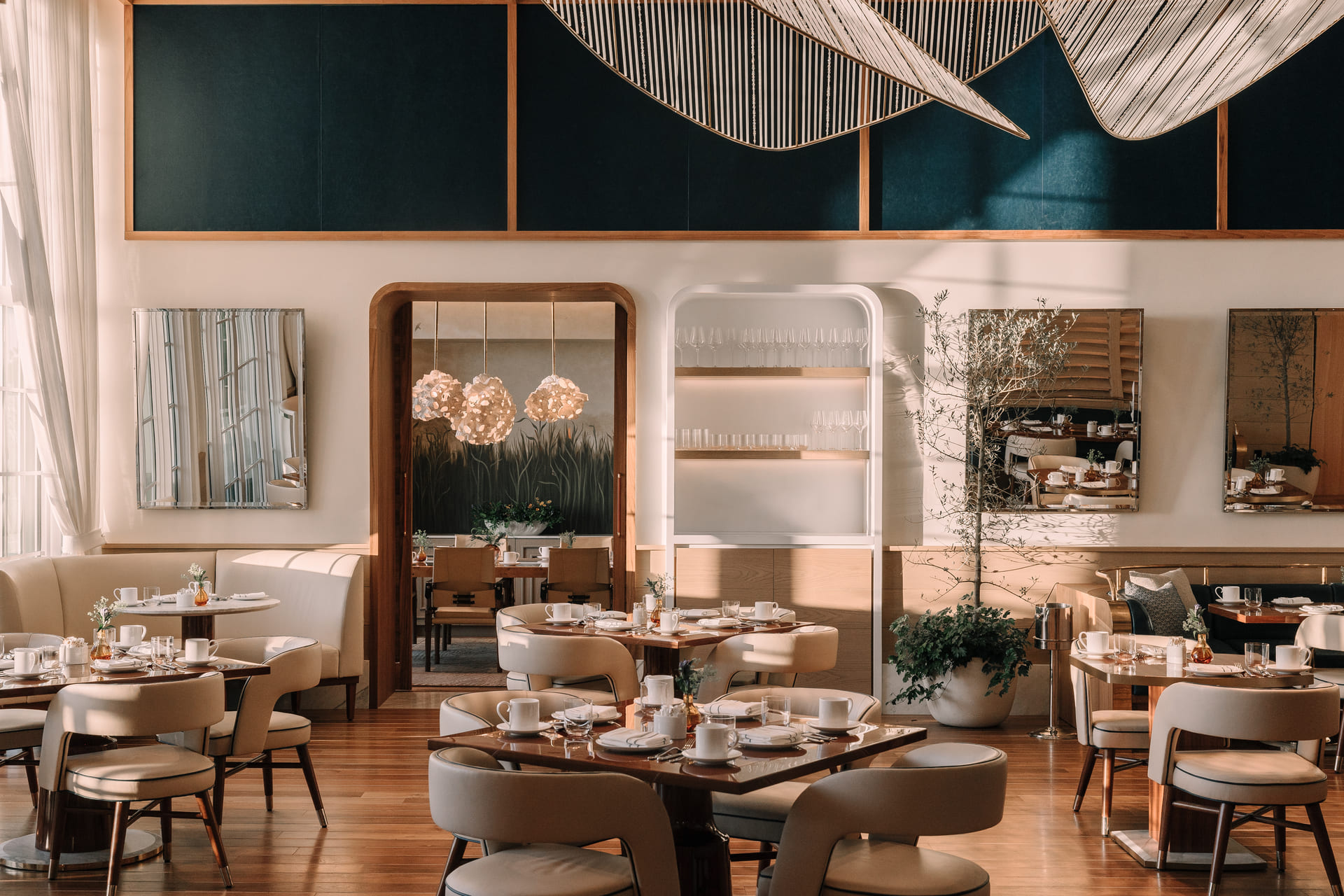
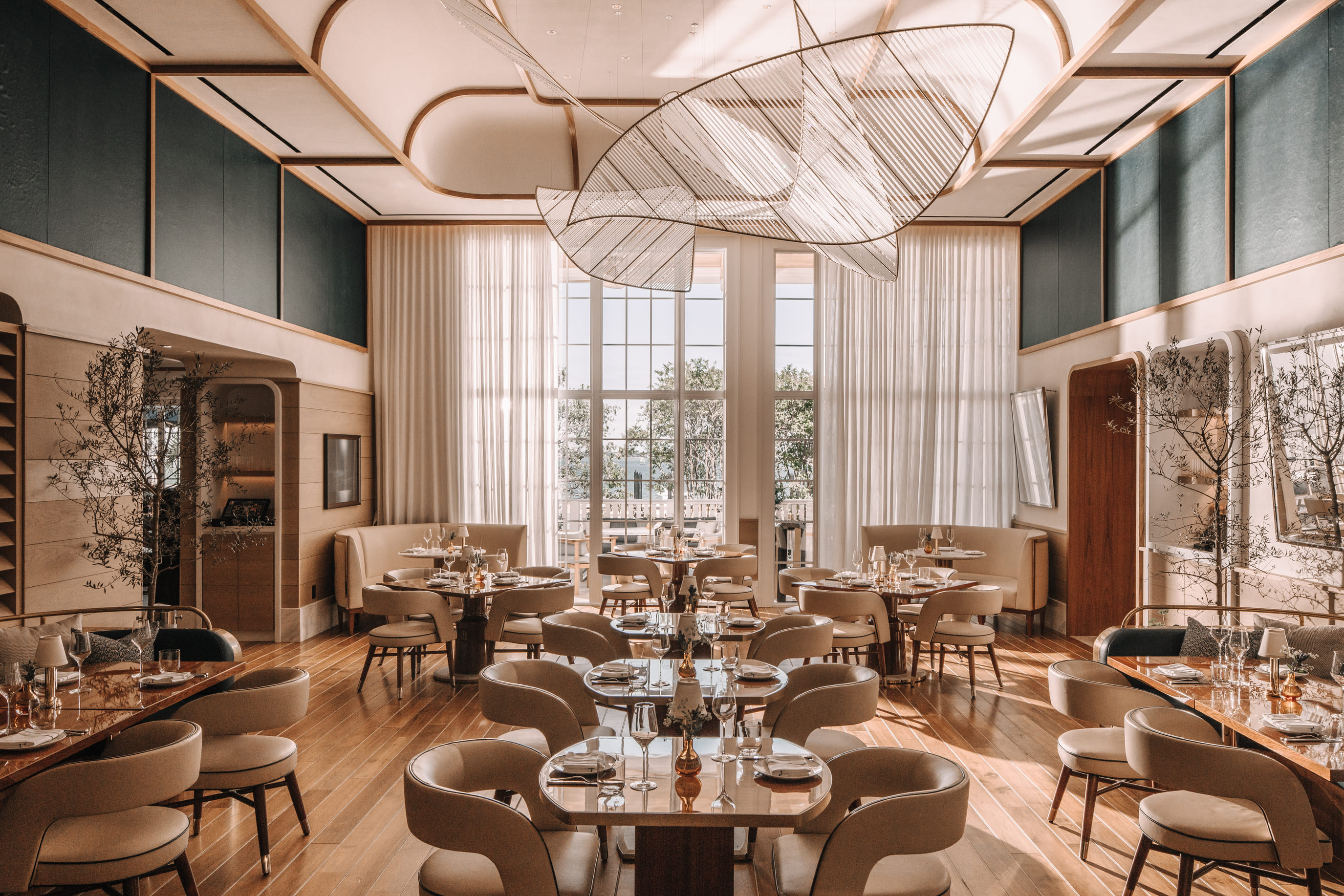
This marks the second collaboration between Meyer Davis and chef Nick Dugan, following Sorelle, yet the atmosphere here moves in a different register. Where their previous work leaned into urban refinement, The Crossing is shaped by exposure – of light, tide, and horizon. The restaurant is conceived as a waterfront environment first, and a dining room second.
From the outset, the design avoids literal nautical clichés in favor of a more abstract maritime sensibility. Instead of referencing the sea through motifs, Meyer Davis works through atmosphere: the weight of teak, the translucency of stone, the softness of reflected light. The result is a space that feels less themed than conditioned by its environment.
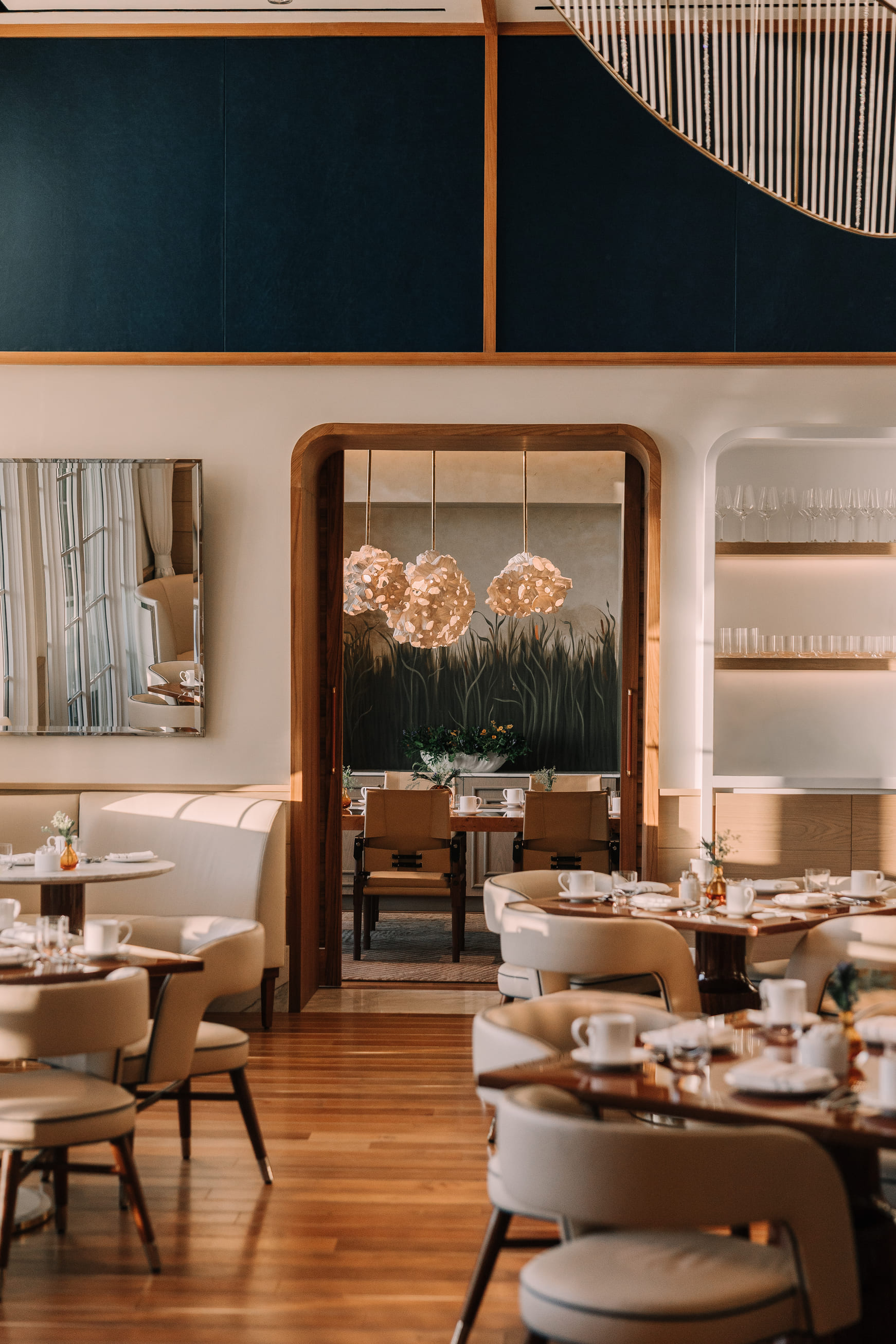
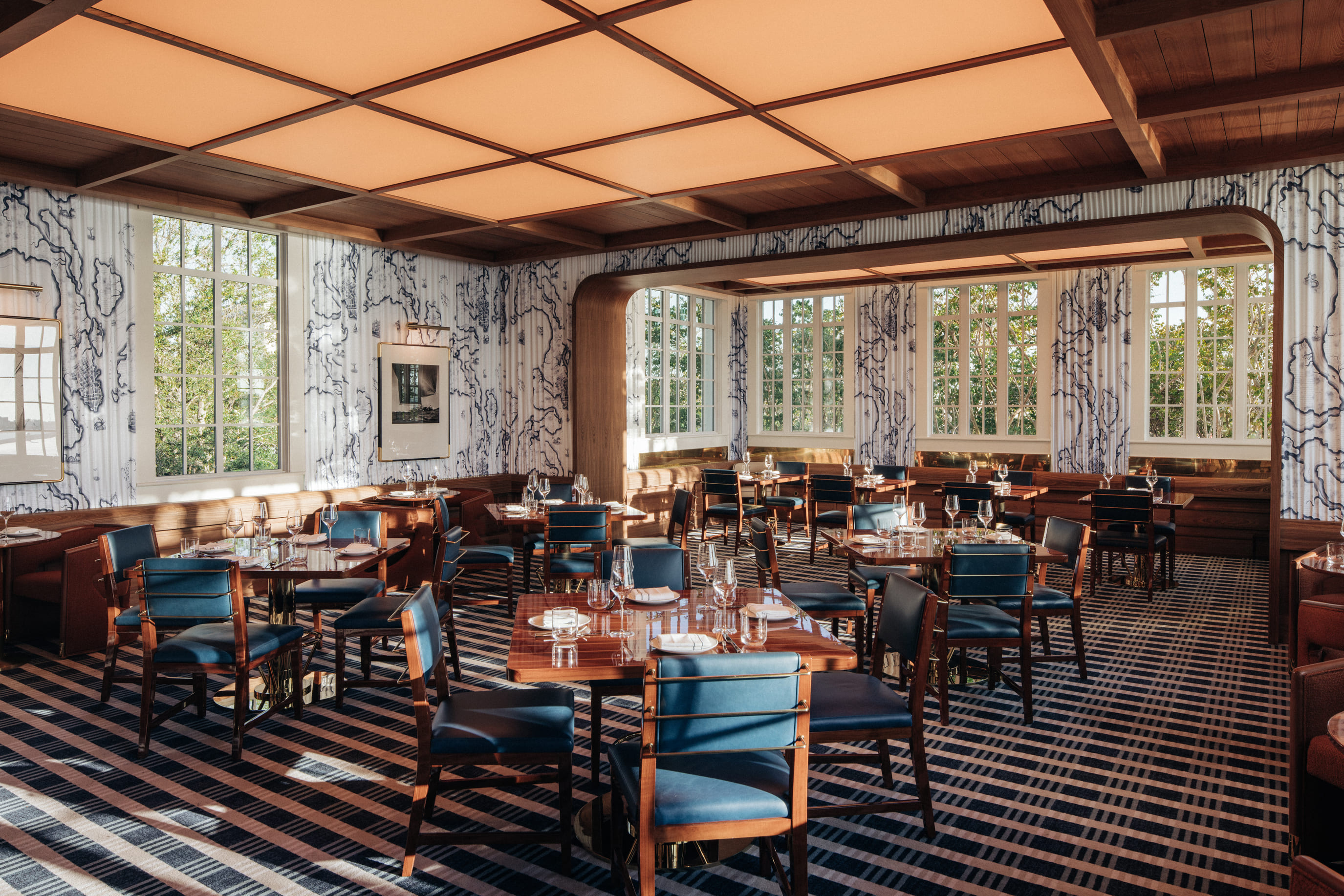
The main dining room opens fully toward Charleston Harbor, where the river becomes a continuous, unframed presence. Here, Meyer Davis uses material restraint to keep attention outward. Teak millwork runs through the space with a quiet precision, while honey onyx introduces a palette of caramel, slate blue, and soft cream – tones lifted directly from the marshland ecosystem just beyond the glass. These surfaces shift subtly throughout the day, registering changes in weather and tide as part of the interior experience itself.
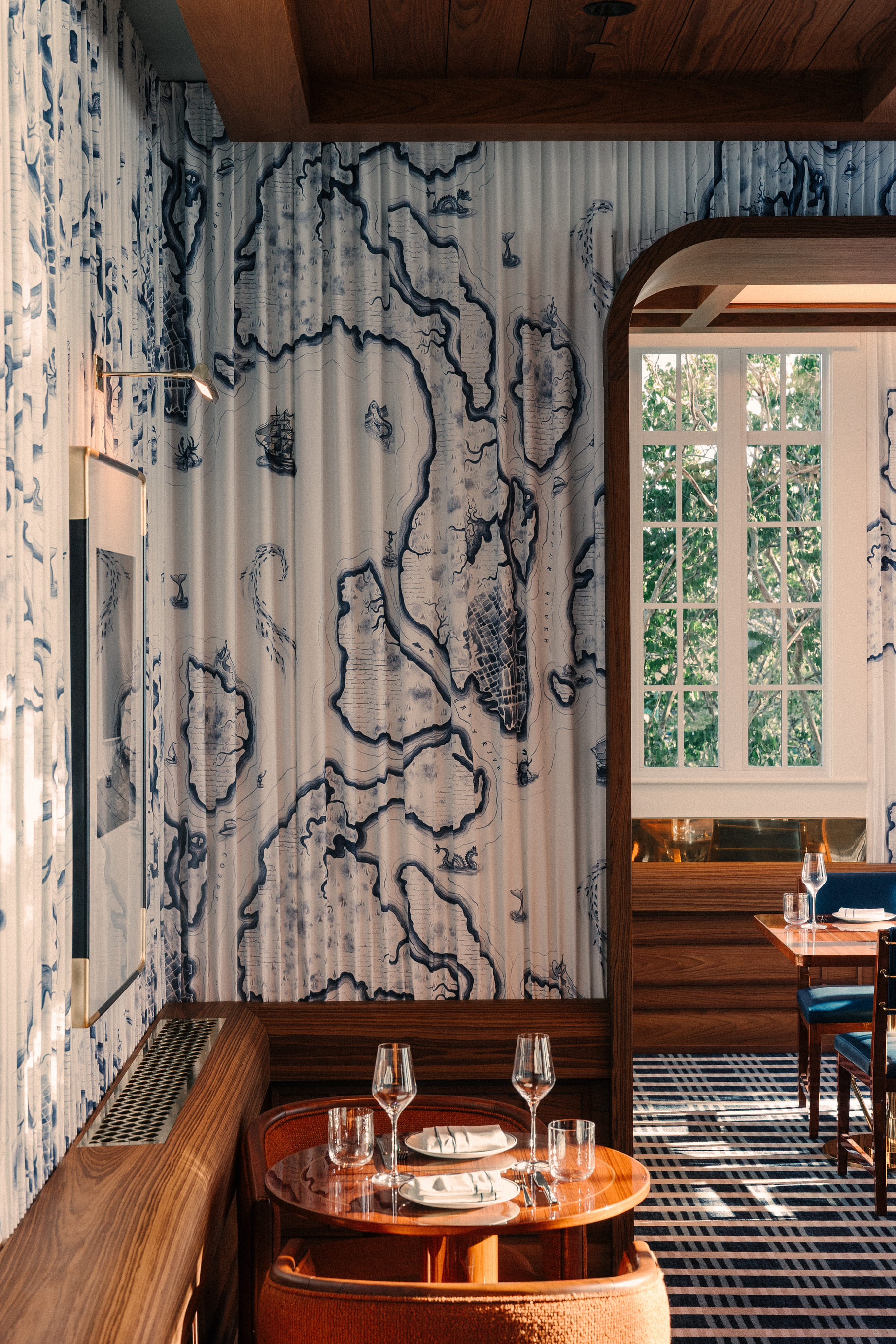
A more unexpected gesture comes through custom hand-painted drapery, designed as a mapped abstraction of the surrounding coastline. Rather than functioning as decoration, it operates almost like a soft architectural drawing – anchoring the restaurant in its geography while filtering it through interpretation rather than illustration.
The spatial composition is built around movement and degrees of exposure. The Captain’s Lounge offers a more enclosed, atmospheric counterpoint to the openness of the main room, while the Chef’s Table sits directly against the open kitchen, compressing distance between preparation and dining. In this configuration, service becomes visible structure rather than background operation.
The kitchen itself is not hidden or softened. Instead, it is allowed to bleed into the dining experience, with the energy of cooking – fire, motion, plating – forming part of the room’s rhythm. The effect is not theatrical in a literal sense, but it does introduce a constant sense of activity that anchors the space.
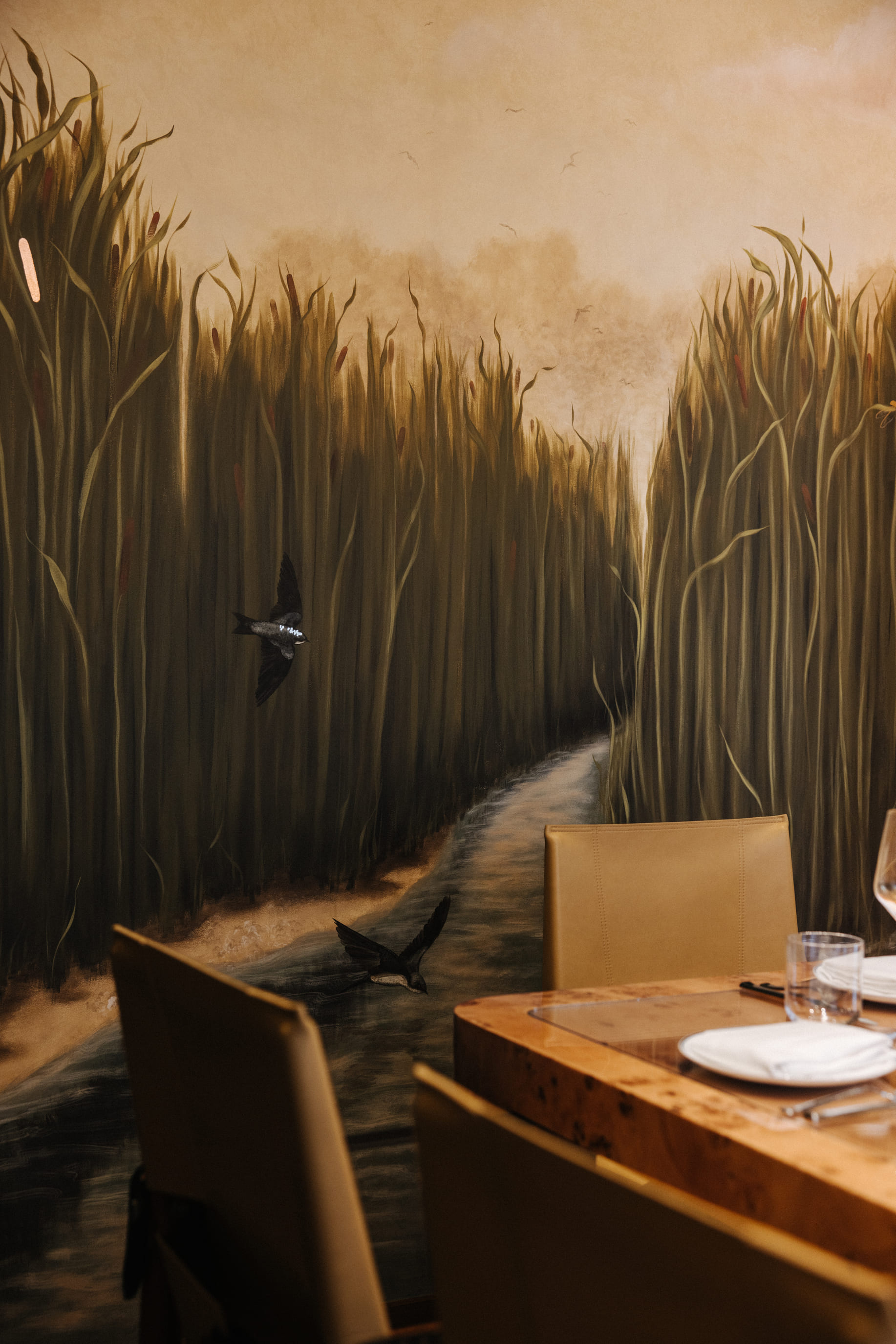
A more intimate layer is introduced in the private dining room, where a custom immersive mural by Lonesome Pictopia transforms the space into a contained landscape. It reads as a visual shift inward – a pause within the broader openness of the restaurant.
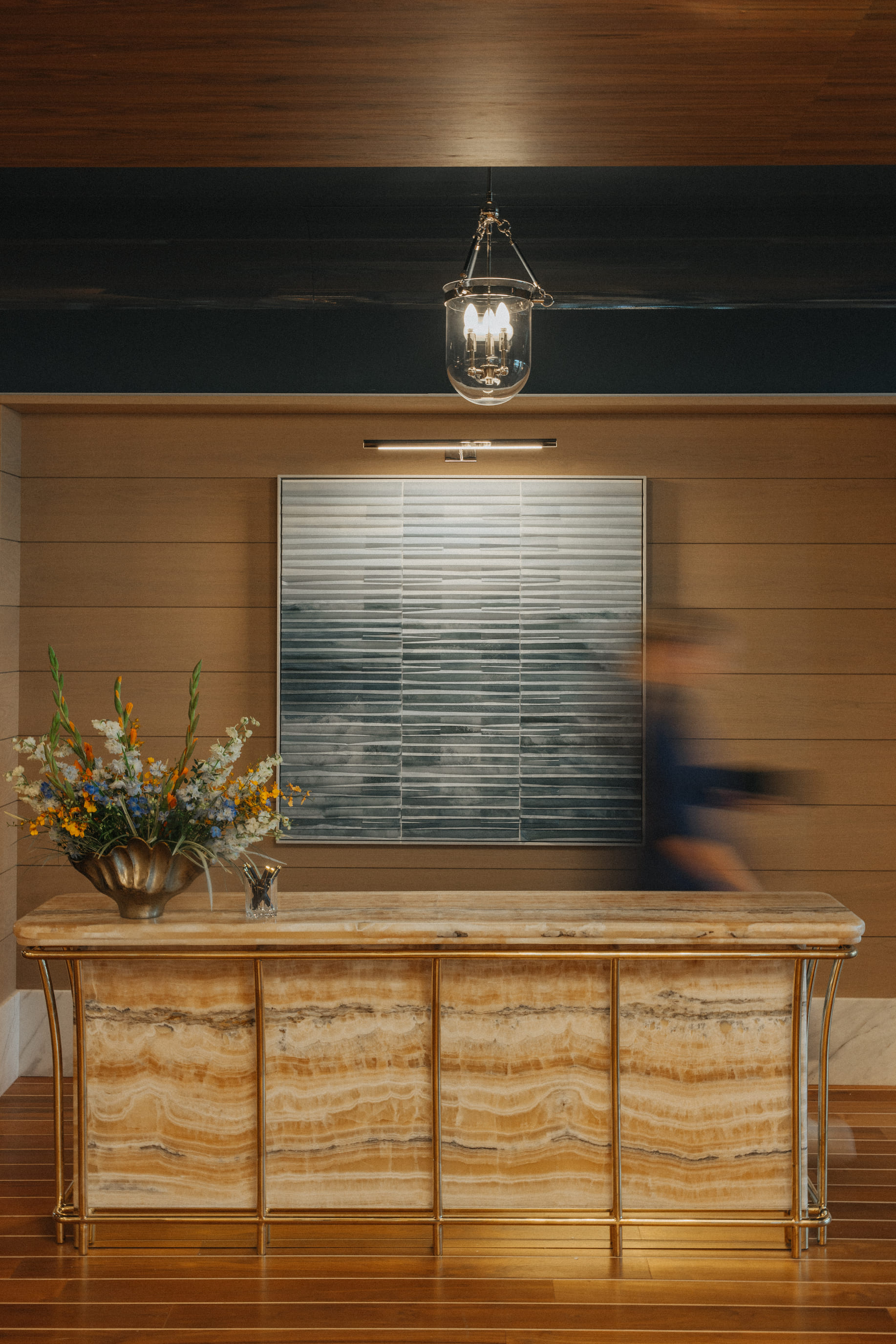
Across the project, Meyer Davis threads in references to both yacht interiors and Lowcountry craftsmanship, though neither is ever fully declared. Basket-weave detailing appears subtly in millwork and bar elements, while polished surfaces and lacquered finishes hint at maritime luxury without overwhelming the architectural clarity of the space. These gestures remain secondary to the overarching intent: to keep attention on water, light, and movement.
Outdoor terraces extend the dining room toward the river, but rather than acting as separate zones, they function as extensions of the same material and atmospheric logic. The transition between inside and outside is deliberately understated, allowing air, humidity, and horizon line to become part of the dining sequence.
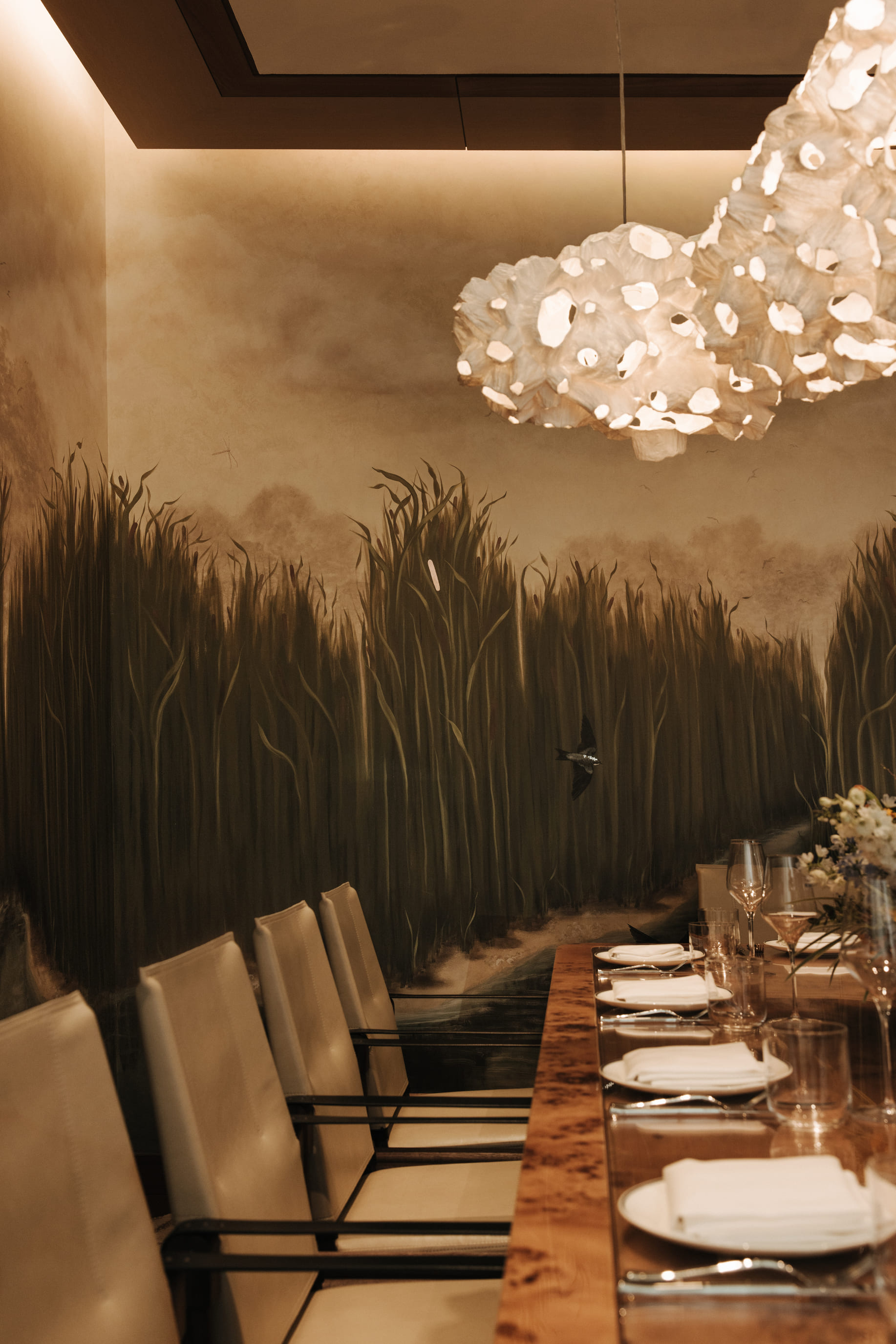
What distinguishes The Crossing is not a single formal idea but the accumulation of small calibrations: the way sightlines are framed, how materials respond to light, how proximity to the kitchen changes the perception of time. Meyer Davis constructs an environment that resists fixed reading, instead unfolding as a sequence of changing relationships between guest, chef, and landscape.
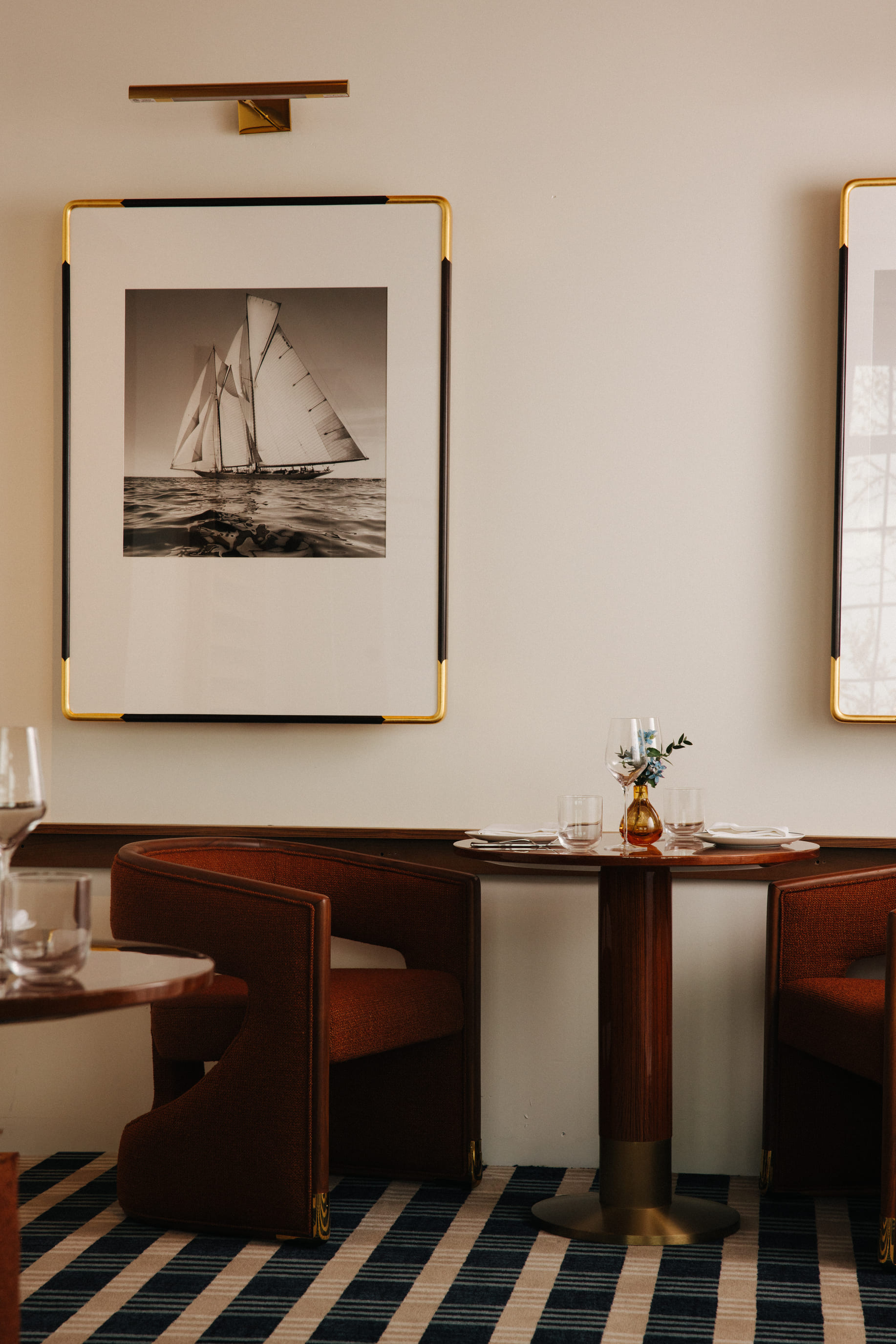
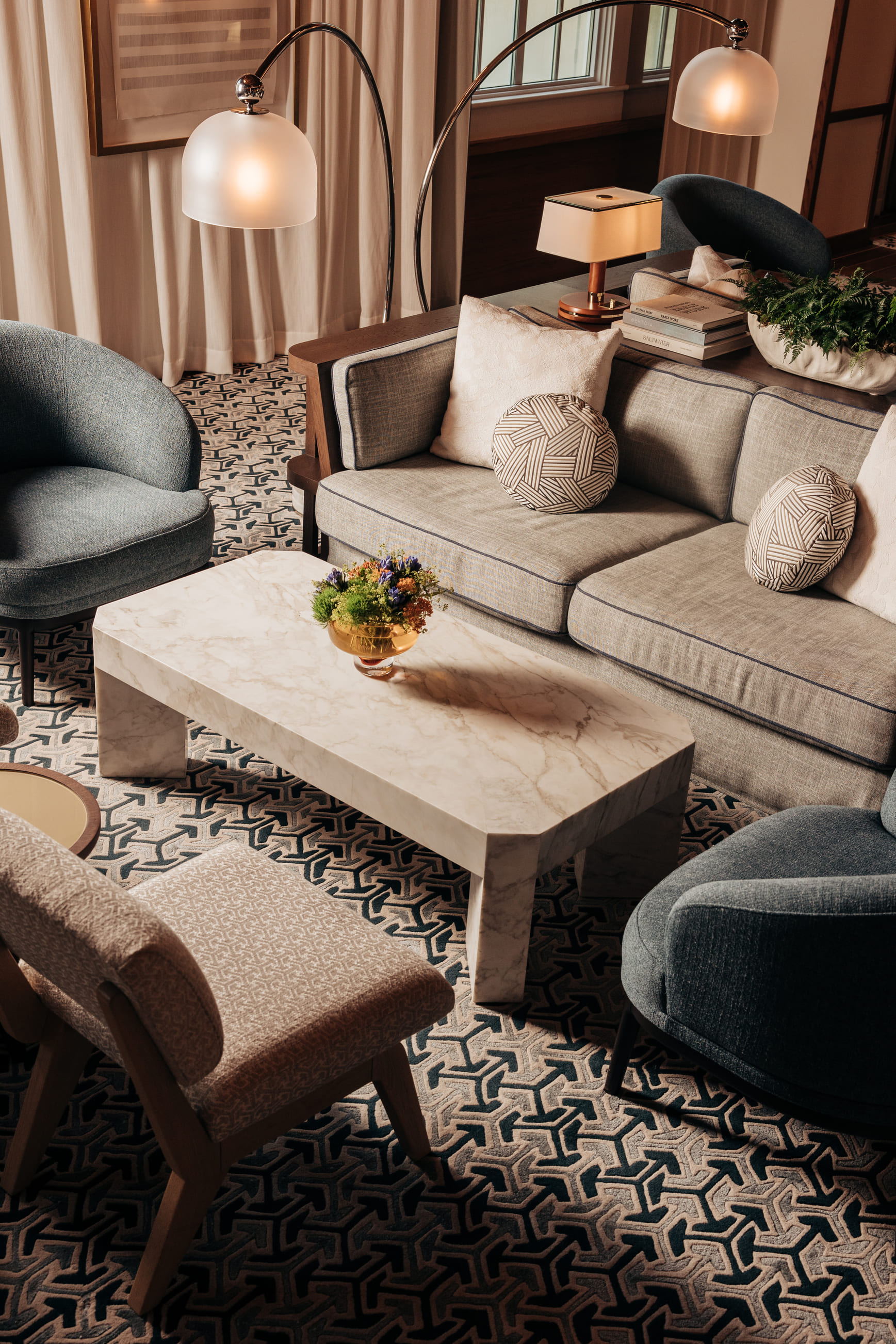
In this sense, the restaurant feels closer to a living interior condition than a finished composition. Charleston’s waterfront is not staged or referenced – it is continuously present, shaping the experience in real time. And within that framework, The Crossing becomes less about arrival than about attunement: to water, to craft, and to the slow rhythm of a place defined by its edge.

Once upon a time there were crafts workshops. Then came the advent of industrial design and mass production.