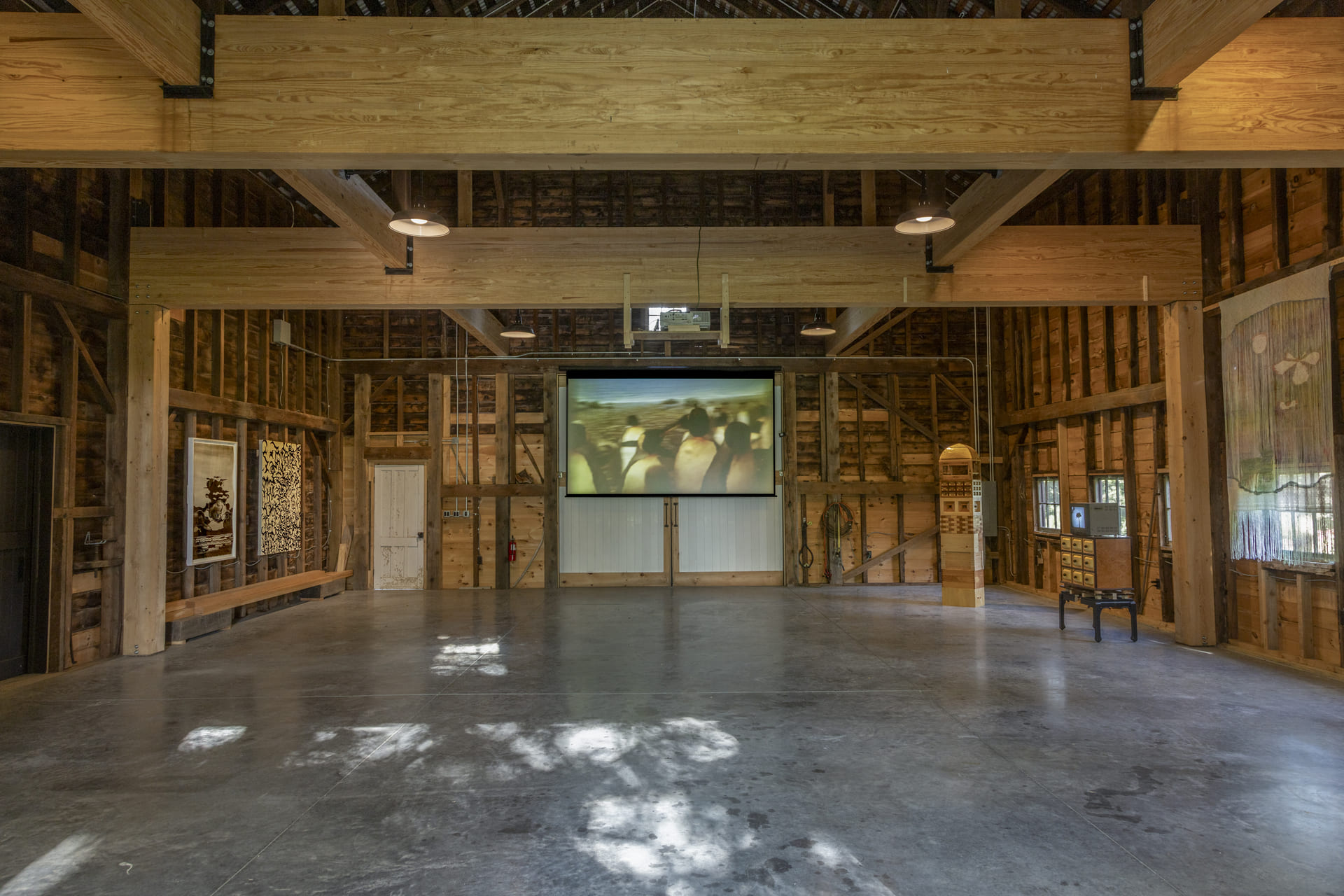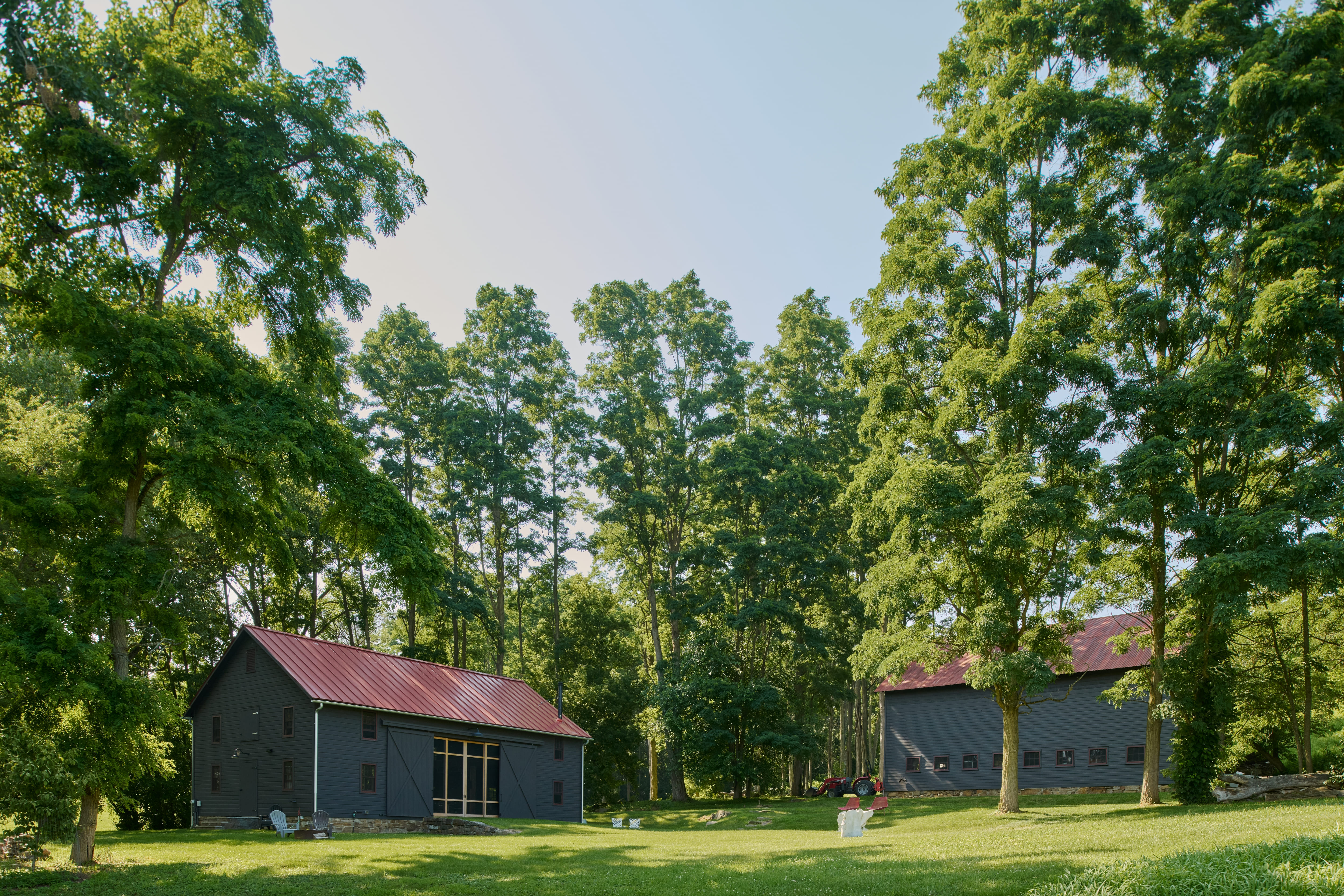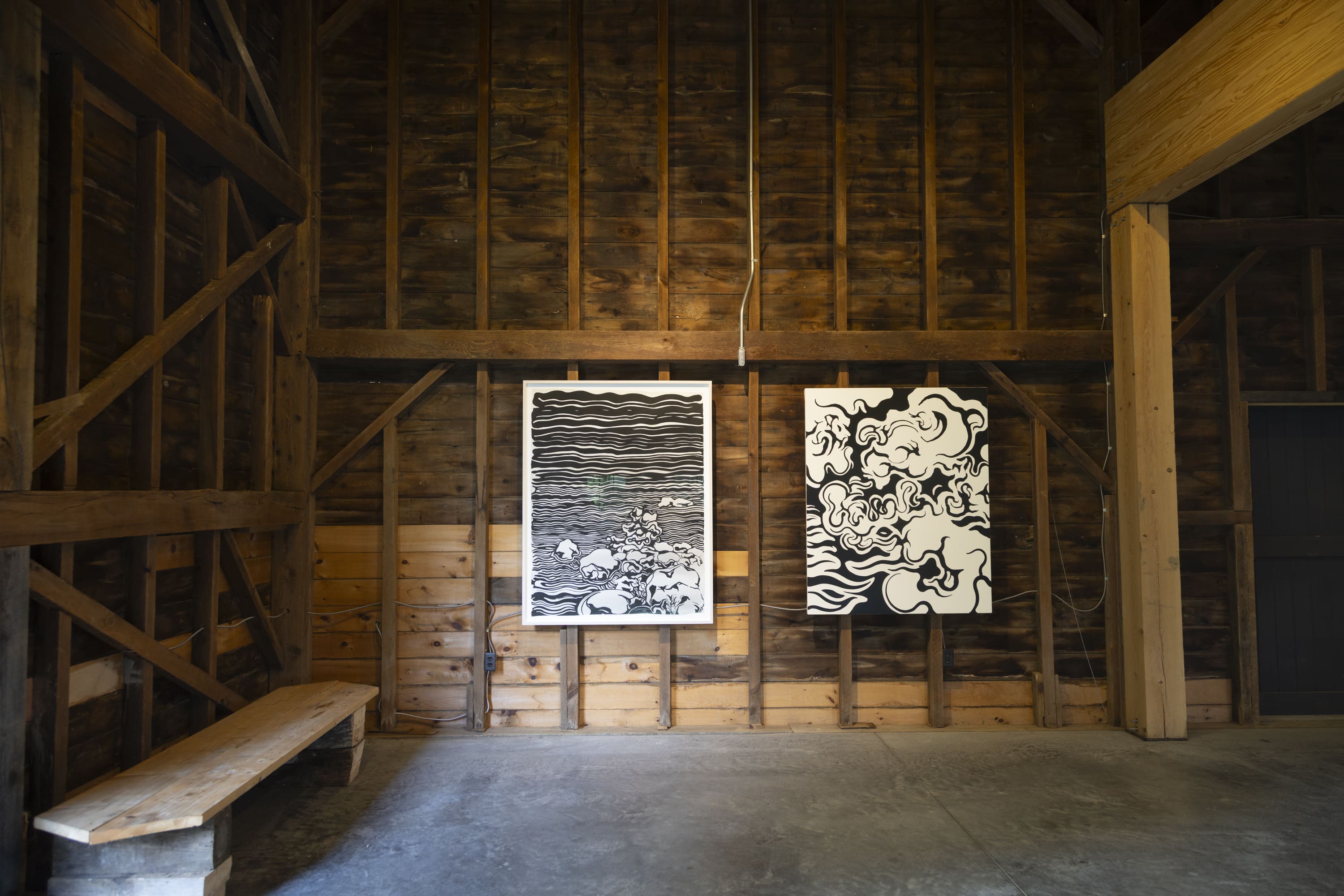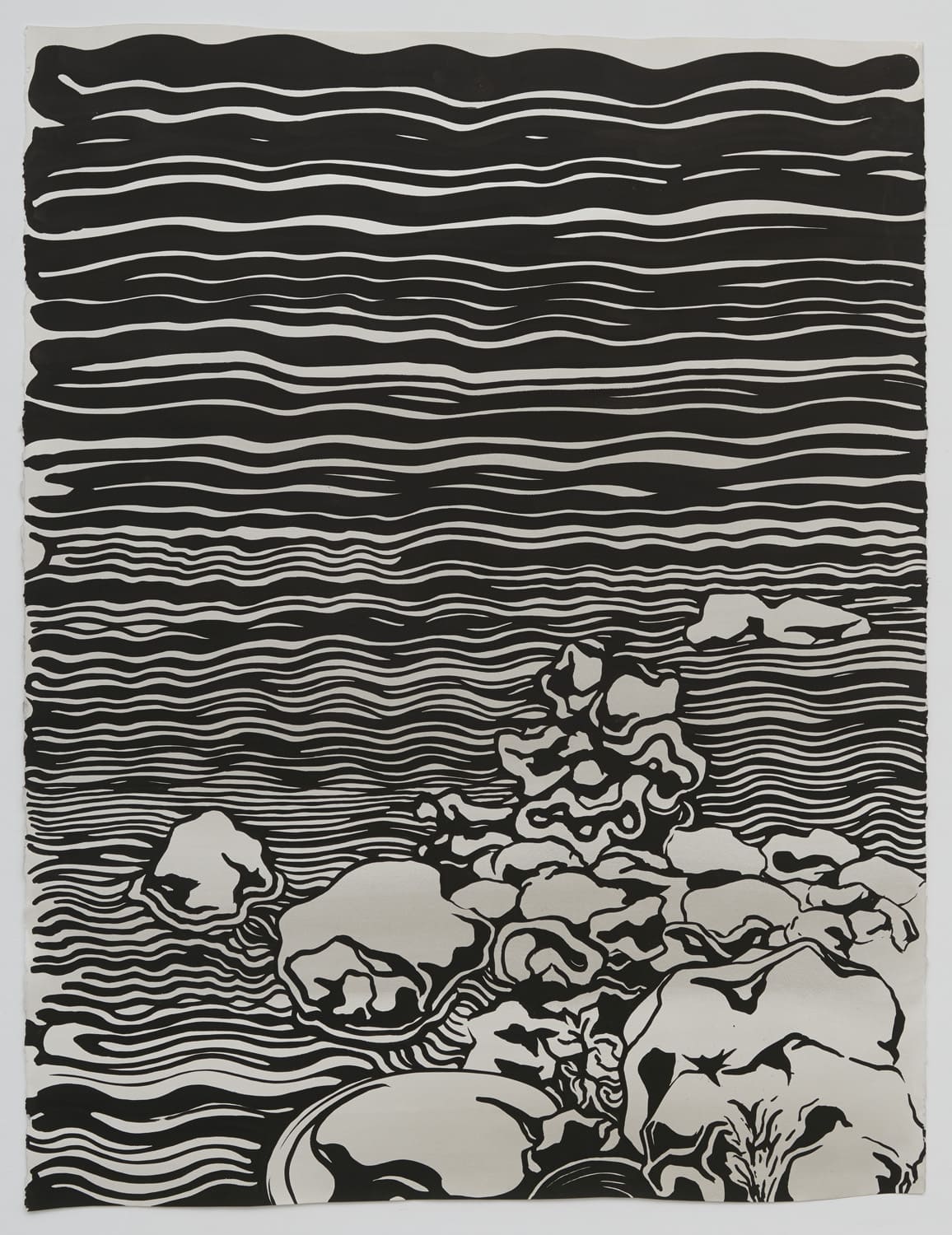
The exhibition explored different boundaries between the natural and the manufactured. Did working at Twin Barns change the way you think about this relationship?
My thinking on this subject did not change, because it is a question I have been working with for a long time. But the exhibition made tangible just how false that binary really is. We are conditioned to view the manufactured as a violation of the natural, but standing inside a timber-frame barn exposes the flaw in that thinking.
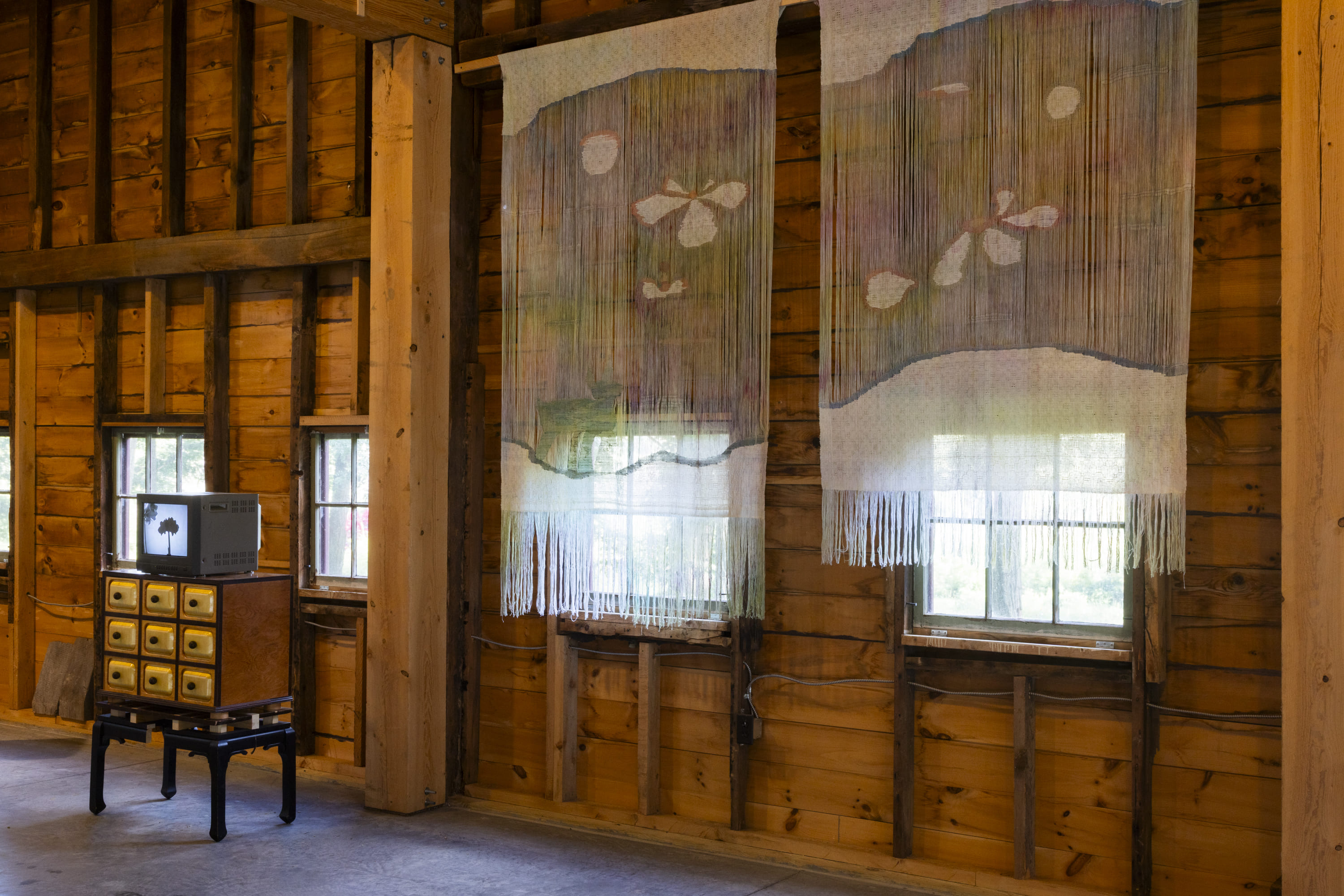
Those barns are evidence of Alix and David Becker's deep consideration of, and collaboration with, the landscape, its conditions and time itself. They renovated the barns so thoroughly that they can safely accommodate artwork in all mediums, regardless of exterior conditions. Yet, with the barn doors open, the spaces felt just as interior as they did exterior.
As an artist and curator, I would not put my work, or that of others, in just any barn. These barns were rebuilt with the utmost care and quality, which is the same language I speak. They elevated the interior without shutting out the exterior.
For Edge Effect, I showed a video of myself flying inside the American Museum of Natural History, kept aloft purely by the building's HVAC currents. The force moving the air is mechanical, and the kite is manufactured, yet the physics of flight (gravity, tension and lift) are as natural as the wind outside. Twin Barns insisted on this same truth: both the space and the work within it are facts, and neither is any less “natural” than the other.